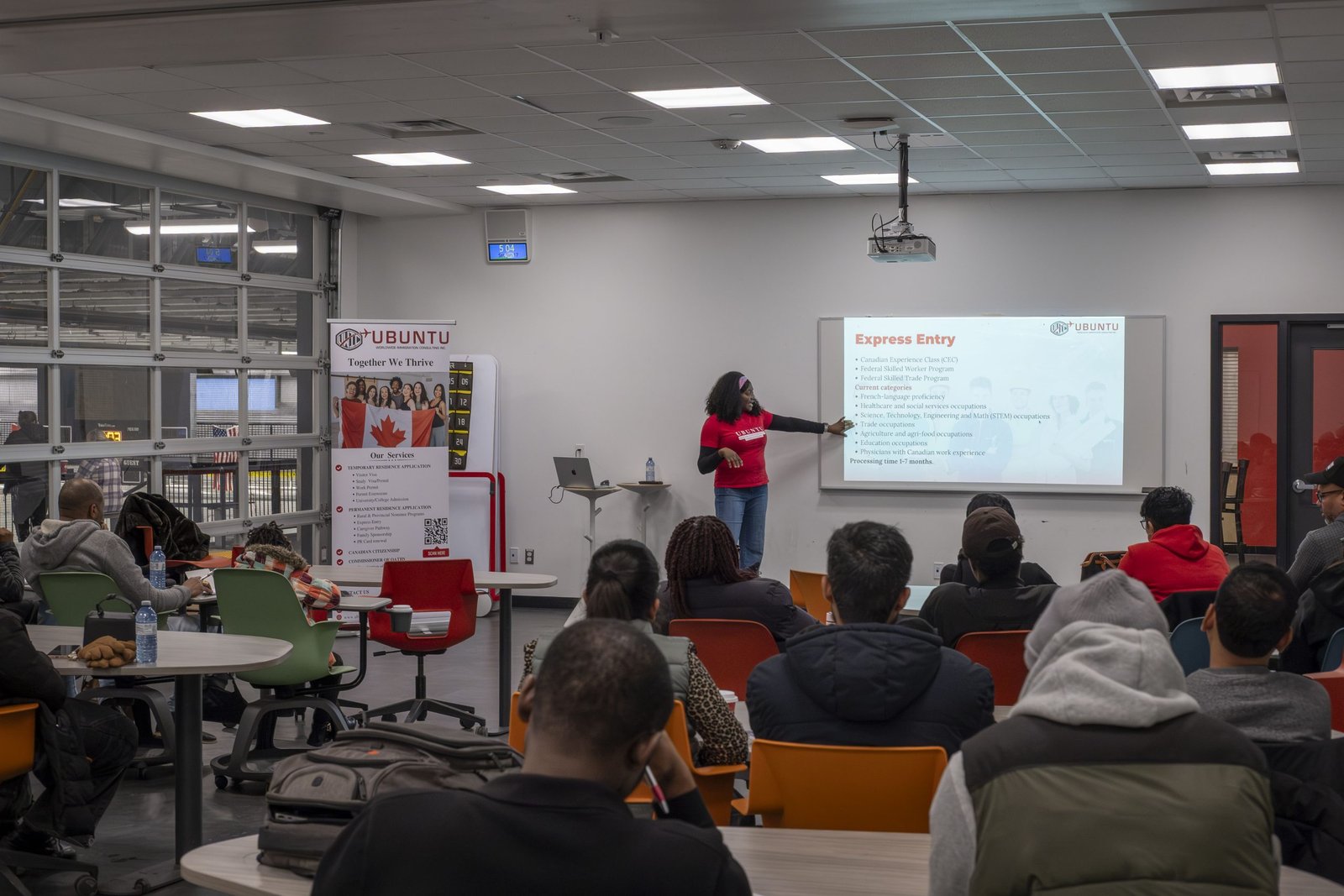
This is the first thing worth getting straight, because almost every mistake downstream follows from misunderstanding it. Express Entry is an electronic system that manages three separate federal programs: the Federal Skilled Worker Program, the Canadian Experience Class, and the Federal Skilled Trades Program. You do not apply to Express Entry. You qualify for one of those three, enter a pool, receive a score, and wait to be ranked above everyone else.
There is no queue and no seniority. A candidate who created a profile yesterday with a higher Comprehensive Ranking System score is invited before someone who has waited eleven months. Your profile expires after twelve months and you start again. Nothing accrues.
The score runs to 1,200. Five hundred points come from core human capital: your age, education, official language ability, and Canadian work experience. Up to forty more come from a spouse or partner. Up to one hundred come from skill transferability, which rewards combinations rather than individual factors, and which is the part most candidates never calculate properly. The remaining six hundred are additional points, dominated by one item: a provincial nomination.
Two developments have reshaped who realistically gets in. The first is category-based selection, introduced in 2023, under which IRCC runs targeted rounds inviting candidates in specific occupational or language categories rather than simply taking the top scorers. A candidate at 380 in a targeted healthcare or French round is invited while a candidate at 470 outside any category waits indefinitely. The second is that job offer points, removed in 2025, return on 3 November 2026, but only for occupations on IRCC high wage list, where a qualifying offer is worth 50 to 100 CRS points and no LMIA is required.
What this means practically is that the common question, whether your score is good enough, is the wrong question. The right one is which route your particular profile opens. And in our experience most candidates are carrying points they never claimed: a credential never assessed, a spouse factor left blank, a sibling in Canada, a skill transferability combination that was simply missed.
Then there is the sixty-day window. When an invitation arrives you have sixty days to submit a complete application with every supporting document, and it does not pause for police certificates that take three months or an employer who will not reply. Most failures at this stage are document failures, not eligibility failures. That is why we assemble the file before the invitation, not after it.