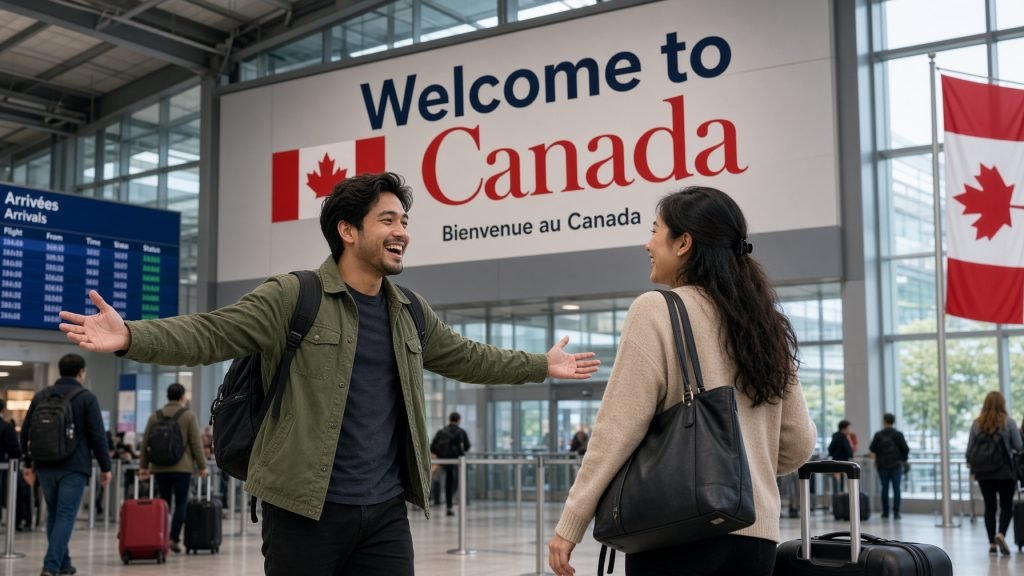
A client sat with us earlier this year holding a college acceptance letter in one hand and a quote from an unlicensed agent in the other. The quote promised that his wife would receive an open work permit the moment the family landed. It was not true, and it had not been true for more than a year. He had already paid the first tuition instalment.
That conversation happens in our office more often than any other. The spousal open work permit, usually shortened to SOWP, was one of the most generous features of Canada’s temporary resident system. Between January 2025 and June 2026 it was rebuilt from the ground up. Most of what is still circulating online, and a great deal of what agents are still selling, describes a programme that no longer exists.
This guide sets out what the rules actually say today, verified against IRCC’s own published pages on 23 October 2026. It is long because the subject is genuinely complicated, and because the cost of getting it wrong is measured in years, not dollars.
The single most important thing to understand
There is no such thing as one spousal open work permit. There are two separate systems with two separate rulebooks, and almost every piece of bad advice we see comes from someone applying one set of rules to the other.
If you hold a study permit, your spouse is assessed under the international student rules. What matters is the programme you are enrolled in.
If you hold a work permit, your spouse is assessed under the foreign worker rules. What matters is your occupation code and whether you are on a pathway to permanent residence.
A graduate holding a post graduation work permit is no longer a student for this purpose. They are a worker, and their spouse is judged on the job they actually hold. That single reclassification catches out more families than any other rule in this guide.
Part one: spouses of international students
Before 21 January 2025, almost any full time student at a designated learning institution could bring a spouse who could work for any employer. That is over. Since that date the door is open only to a defined list of programmes.
Which programmes qualify
| Your programme of study | Spouse eligible for an open work permit | What decides it |
|---|---|---|
| Master’s degree of 16 months or longer | Yes | Programme length is measured in months, not semesters |
| Master’s degree shorter than 16 months | No | A 12 month master’s degree does not qualify, however demanding it is |
| Doctoral degree | Yes | No minimum length is stated |
| Listed professional degree at a university | Yes | Only the degrees named in the list below |
| An eligible pilot or bridging programme | Yes | Only the programmes named in the second table below |
| College diploma or certificate | No | Level, not quality, decides |
| Bachelor’s degree other than the listed professional ones | No | A general undergraduate degree does not qualify |
The professional degrees that do qualify are Doctor of Dental Surgery (DDS, DMD), Bachelor of Law or Juris Doctor (LLB, JD, BCL), Doctor of Medicine (MD), Doctor of Optometry (OD), Pharmacy (PharmD, BS, BSc, BPharm), Doctor of Veterinary Medicine (DVM), Bachelor of Science in Nursing (BScN, BSN), Bachelor of Nursing Science (BNSc), Bachelor of Nursing (BN), Bachelor of Education (BEd) and Bachelor of Engineering (BEng, BE, BASc).
Read that list closely. Nursing and education and engineering are on it at the bachelor’s level. Business, computing, hospitality and general arts are not. Two students at the same university, paying similar fees, can get opposite answers.
The eligible pilot and bridging programmes
| Province or territory | Programme | Eligible from |
|---|---|---|
| Outside Quebec | Francophone Minority Communities Student Pilot | 26 August 2024 |
| Quebec | Recognition of skills for internationally recruited nurses | 30 April 2024 |
| Quebec | Recognition of skills for respiratory therapists trained abroad, and for medical technologists trained abroad | 21 January 2025 |
| Ontario | Supervised Practice Experience Partnership | 21 January 2025 |
| Manitoba | Nurse Re Entry, Red River College Polytechnic | 21 January 2025 |
| British Columbia | Internationally Educated Midwives Bridging Program and Canadian Pharmacy Practice Program at the University of British Columbia, and the Post Degree Diploma in Nursing Practice in Canada at Langara College | 21 January 2025 |
Notice the pattern. Every single one of these is a health care or French language programme. The policy is not rewarding effort or expense. It is buying labour the country has decided it needs, which is the same logic now running through Express Entry and the provincial nominee programs.
The extension trap almost nobody warns you about
This is the part that costs families the most, and it is the part that secondary sources consistently get wrong. The rules for a first spousal open work permit and the rules for an extension are not the same rules.
| Requirement | First application | Extension |
|---|---|---|
| Your study permit must be valid | Yes | Yes |
| Programme test applied to you | Master’s of 16 months or longer, doctoral, a listed professional degree, or an eligible pilot | Full time enrolment in a programme that is eligible for a post graduation work permit |
| Stage of your studies | No restriction stated | You must not be in the last term of your programme |
| Your physical presence | Not a stated condition | You must be in Canada, or will be in Canada while studying |
| Length granted | Usually matches your study permit | Cannot extend beyond your study permit expiry |
Read the third row again. If your spouse’s permit happens to expire during your final semester, they cannot extend it. Not because anything went wrong, and not because anyone made a mistake, but because of where you happen to be in your programme on the day the application is received.
The consequence is ordinary and brutal. The household loses an income in the most expensive month of the degree, often while the family is also paying for the post graduation work permit application and preparing for a move. We plan around this by looking at the spouse’s permit expiry and the student’s final term together, twelve months before either one matters.
Part two: spouses of foreign workers
The worker side is where most of the money and most of the confusion sits. IRCC assesses it as a decision tree, and the order of the questions matters more than any single answer.
The permanent residence question comes first
Before anyone looks at your job title, IRCC asks whether you have applied for permanent residence through an eligible economic programme or pilot, or hold a work permit issued because you are on a pathway to one. If the answer is yes, the rules that follow are far more generous, and your dependent children come back into the picture.
The eligible programmes include the Canadian experience class, federal skilled worker class and federal skilled trades class, the Provincial Nominee Program, the Atlantic Immigration Program, the Rural Community Immigration Pilot, the Francophone Community Immigration Pilot, the Rural and Northern Immigration Pilot, the Agri Food Pilot, the caring for children and caring for people with high medical needs classes, the Home Child Care Provider and Home Support Worker direct to permanent residence streams, the start up business class, and Quebec selection certificate holders who have applied for permanent residence.
This is the single most useful fact in this article. A family that is ineligible today can become eligible by filing a permanent residence application that was always part of the plan. The sequence of your filings, not just their content, decides whether your spouse works.
The four situations, side by side
| Your situation as the worker | Spouse or partner | Dependent children | The condition that decides it |
|---|---|---|---|
| You have applied for permanent residence under an eligible economic programme or pilot | Eligible | Eligible | Your work permit must be valid for at least 6 months after IRCC receives their application |
| You hold a work permit issued because you are on a pathway to permanent residence, but have not yet applied | Eligible | Eligible | Applies to TEER 4 and 5 occupations on listed streams, with the same 6 month rule |
| High skilled worker, no permanent residence pathway | Eligible | Not eligible since 21 January 2025 | Your work permit must be valid for at least 16 months after IRCC receives the application |
| Low skilled worker, no permanent residence pathway | Not eligible | Not eligible | Extensions only, and only for family already in Canada under narrow conditions |
What high skilled actually means here
High skilled does not mean well paid, and it does not mean senior. It means your National Occupational Classification code sits in TEER 0 or TEER 1, or in one of the selected occupations inside TEER 2 or TEER 3.
TEER 0 and TEER 1 are covered in full. TEER 2 and TEER 3 are covered only where the occupation appears on IRCC’s published list, which is weighted heavily toward health care, the skilled trades, construction, transport and early childhood education. Licensed practical nurses, medical laboratory technologists, welders, electricians, plumbers, carpenters, heavy duty equipment mechanics, crane operators, transport truck drivers, early childhood educators and nurse aides are all on it. Many office and service occupations at the same TEER level are not.
So two people with the same employer, the same tenure and similar pay can receive opposite answers because their occupation codes differ. We check the code before we check anything else, the same way we do when we estimate a CRS score or run an eligibility assessment.
The 16 month rule, which is quietly the hardest test
A high skilled worker who is not on a permanent residence pathway must hold work authorisation valid for at least 16 months after IRCC receives the spouse’s application. A two year work permit therefore stops supporting a spousal application roughly eight months into its life.
This is why timing beats eligibility in practice. Families who qualify on paper routinely fail because they waited, renewed late, or did not realise their own renewal had to come first. If your permit is approaching this line, the LMIA grace period and your extension strategy become the whole conversation.
Three doors that opened in 2026
Against the general tightening, IRCC opened three targeted exceptions this year, and each one waives or relaxes a rule that blocks everyone else.
| In force from | Who it covers | What it changes |
|---|---|---|
| 23 March 2026 | Workers on a significant investment project in British Columbia | Spouse eligible at any TEER level, and the 16 month rule does not apply. The job title field must read SIPSPOUSEBC |
| 25 May 2026 | Health professionals recruited by Quebec as registered nurses and registered psychiatric nurses, respiratory therapists and clinical perfusionists, or medical laboratory technologists | The 16 month rule does not apply. The job title field must read CONJOINTSANTEQC |
| 5 June 2026 | Workers who applied for permanent selection under Quebec’s Programme de selection des travailleurs qualifies | Spouse or partner may apply if they meet the eligibility requirements |
These are small doors, and they are easy to miss. They are also easy to fail on a technicality, because each one depends on an exact code typed into a specific field of the application form.
Who is shut out no matter what
Some situations disqualify a family regardless of occupation or permanent residence plans. Your spouse cannot obtain an open work permit through these measures if you have made a refugee claim that was referred to the Immigration and Refugee Board, if you are subject to an unenforceable removal order, if you are an international student holding a study permit, if you are a student working on campus or off campus without a work permit, if you are a student working in a co op programme, or if you yourself hold a spousal open work permit.
That last one deserves its own sentence. A spousal open work permit cannot be used to generate another spousal open work permit. The chain stops at one.
What changed, and when
| Date | What happened |
|---|---|
| 26 August 2024 | Spouses of students in the Francophone Minority Communities Student Pilot become eligible |
| 21 January 2025 | The major narrowing. Student spouses limited to master’s degrees of 16 months or longer, doctoral degrees, listed professional degrees and eligible pilots. Worker spouses limited to TEER 0, TEER 1 and selected TEER 2 and TEER 3 occupations. Dependent children of high skilled workers lose eligibility. Families of low skilled workers lose eligibility outside extensions |
| 23 March 2026 | British Columbia significant investment project exception opens |
| 25 May 2026 | Quebec foreign trained health professional exception opens |
| 5 June 2026 | Quebec skilled worker selection programme applicants added |
Anything you read that was written before 21 January 2025 is describing a different programme. That includes a great deal of advice still being given confidently in community groups.
If your spouse does not qualify, these routes still exist
Losing eligibility for this particular permit is not the end of the plan. It changes which door you walk through.
| Route | Who it is for | What it gives |
|---|---|---|
| Inland spousal sponsorship open work permit | A spouse, common law partner or conjugal partner living in Canada who is being sponsored by a citizen or permanent resident, and who has an acknowledgement of receipt for the permanent residence application | An open work permit while the sponsorship is processed. Not available if the permanent residence application is refused, withdrawn or returned, and not available at a port of entry |
| RCIP and FCIP spouse permits | Spouses of applicants under these two pilots | A separate open work permit issued under the pilots themselves. Dependent children use the general family measure instead |
| Employer specific work permit | A spouse who has, or can obtain, a genuine job offer | Authorisation to work for that employer. Often faster than people expect where the employer is willing to support it |
| Their own study permit | A spouse who would rather study than wait | Full time study, with on campus work and limited off campus work, and a post graduation work permit if the programme qualifies |
| Visitor record | A spouse who will not be working | Lawful temporary resident status while the family is in Canada |
The route that most often gets overlooked is the first one. Where the student or worker is themselves close to permanent residence, the sponsorship or economic application can be the fastest way to put the household back on two incomes.
Five planning lessons
One. The programme you choose decides whether your family works. Before the deposit, before the flights, the programme level and type should be checked against this list. A sixteen month master’s degree and a twelve month master’s degree are different immigration products.
Two. The occupation code decides, not the salary. We have seen well paid managers qualify and well paid specialists fail, purely on the NOC.
Three. 16 months and 6 months are different tests. Which one applies to you depends entirely on whether you are on a permanent residence pathway. Getting this wrong is the most common reason a technically eligible family is refused.
Four. Extensions are judged under today’s rules. Not the rules that applied when the first permit was issued. Every renewal is a fresh assessment, and the last term bar applies at renewal only.
Five. Filing for permanent residence changes everything. It restores eligibility for dependent children, drops the 16 month test to 6 months, and opens the measure to low skilled workers who are otherwise excluded. For many families the right answer is not to chase a better job, it is to file sooner.
The mistakes we see most often
Counting a spouse’s future earnings in the proof of funds for a study permit application. If the spouse is not eligible for a work permit, that income does not exist as far as IRCC is concerned, and a refusal on financial grounds is difficult to recover from.
Applying for an extension during the final term. The application is receivable and the fee is payable. It is simply not approvable.
Letting a spouse’s status lapse while waiting for the principal applicant’s renewal. Maintained status and restoration are narrow and unforgiving, and losing them can end the family’s ability to work at all.
Trusting guidance written before January 2025. Dates matter more than reputations here.
Assuming a refusal is final. Many are the result of a missing document or a mis entered job title code rather than a real eligibility failure.
Frequently asked questions
Can my spouse get an open work permit if I am studying a college diploma?
No. Since 21 January 2025, college diplomas and certificates do not qualify a spouse for an open work permit, however long the programme is and whatever it costs. The qualifying programmes are master’s degrees of 16 months or longer, doctoral degrees, a defined list of professional degrees at a university, and a small set of named pilot programmes.
Does a twelve month master’s degree qualify?
No. The threshold is 16 months, measured as programme length. A twelve month or fourteen month master’s degree does not qualify a spouse, even at a research university. This is one of the most expensive misunderstandings in Canadian student immigration, because the decision is usually made at application stage when it could still be changed.
I work in a TEER 3 job. Is my spouse eligible?
Only if your specific occupation appears on IRCC’s list of selected TEER 2 and TEER 3 occupations. TEER 0 and TEER 1 are covered in full, but TEER 2 and TEER 3 are covered occupation by occupation. Find your National Occupational Classification code first, then check it against the published list, because the TEER level alone does not answer the question.
Can my dependent children get open work permits too?
It depends on whether you are on a permanent residence pathway. If you have applied for permanent residence through an eligible economic programme or pilot, or hold a work permit issued because you are on a pathway to one, your dependent children and their dependent children may be eligible. If you are a high skilled worker with no permanent residence application, they lost eligibility on 21 January 2025.
Can my spouse’s work permit last longer than my study permit?
No. A spousal open work permit granted through the student measure cannot extend beyond the expiry of your study permit, and in most cases it is issued to match it. The permit is also limited by the validity of your spouse’s passport and biometrics, which frequently shortens it further than people expect.
My spouse already has a permit. Do the new rules affect them?
An existing permit remains valid until it expires. The new rules bite at renewal, because every extension is assessed under the rules in force on the day it is received. A family that qualified comfortably in 2024 can find itself ineligible in 2026 without anything in their own situation having changed.
How we can help
Ubuntu Worldwide Immigration Consulting Inc. is led by Mary Unogwu Ogenyi-Igoche, a Regulated Canadian Immigration Consultant, RCIC-IRB R731653, regulated by the College of Immigration and Citizenship Consultants. We work with students, workers and their families from Sault Ste. Marie, Ontario, and across Canada.
For a spousal open work permit question we look at four things together: the programme or occupation code, the expiry dates on every permit in the household, where you sit in the permanent residence sequence, and what the household will need eighteen months from now rather than today. That last one is what separates a permit application from a plan.
If you are choosing a programme, holding an offer, approaching a renewal, or you have just discovered that your spouse is not eligible after all, book a consultation. You can also start with a free eligibility assessment or review our full range of immigration services, and if you are already planning a route to permanent residence, our guides to the 14 RCIP communities, the Express Entry high wage changes and work permit options after applying for permanent residence are a good next step.
This article is general information and not legal advice. Every rule described here was verified against the Government of Canada’s published pages on 23 October 2026. Immigration rules change without notice and your own circumstances matter. For advice on your situation, speak to a Regulated Canadian Immigration Consultant or a lawyer.